

| Net Explosive Content per 100 units | 0.0885 kg |
| Period / Delay Time (msec) | Period / Delay Time (msec) |
| 1 / 100 | 13 / 1700 |
| 2 / 200 | 14 / 2000 |
| 3 / 300 | 15 / 2300 |
| 4 / 400 | 16 / 2700 |
| 5 / 500 | 17 / 3100 |
| 6 / 600 | 18 / 3500 |
| 7 / 700 | 19 / 3900 |
| 8 / 800 | 20 / 4400 |
| 9 / 900 | 21 / 4900 |
| 10 / 1000 | 22 / 5400 |
| 11 / 1200 | 23 / 5900 |
| 12 / 1400 | 24 / 6400 |
| Hazardous Shipping Description | Detonator assemblies, nonelectric, 1.1B, UN 0360 PG II |
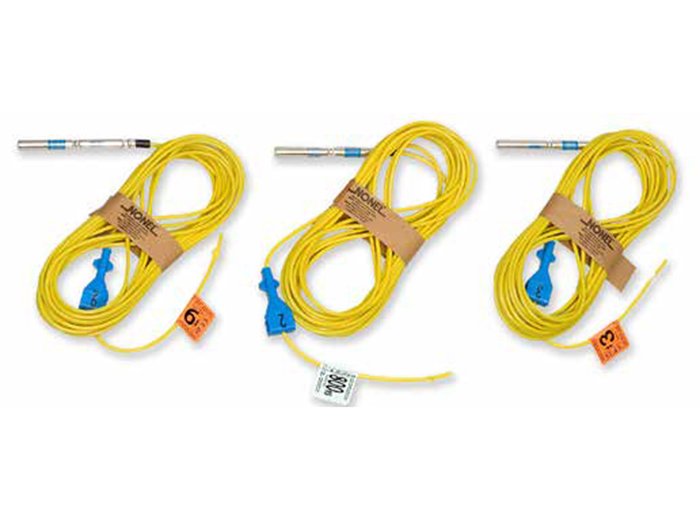
NONEL® nonelectric delay detonator LP units consist of a length of yellow shock tube with a High Strength detonator attached to one end and the other end sealed. A blue J-hook, with pad-printed delay period, is affixed near the sealed end, providing easy means of connection to detonating cord. Easy-to-read, color-coded delay tags display the delay number and nominal firing time prominently.
NONEL LP units are designed to provide in-hole delay time for underground (non-coal) and special construction blasting applications that require long delay times to improve relief and fragmentation (such as drift development, raise and shaft work, as well as slope and tunnel blast rounds). They are typically used with detonating cord but can also be used with NONEL EZTL™ and NONEL TD detonators for additional timing flexibility.
NONEL LP must be transported, stored, handled and used in conformity with all federal, state, provincial and local laws and regulations.
For maximum shelf life (3 years), NONEL LP must be stored in a cool, dry, well ventilated magazine. Explosive inventory should be rotated. Avoid using new materials before the old. For recommended good practices in transporting, storing, handling and using this product, see the booklet “Prevention of Accidents in the Use of Explosive Materials” packed inside each case and the Safety Library Publications of the Institute of Makers of Explosives.
| Length | Case Type | Quantity / Case | |
| m | |||
| 2.4 | D | 300 | |
| 3 | D | 220 | |
| 4.2 | D | 220 | |
| 4.8 | D | 180 | |
| 6 | D | 180 | |
| 10.2 | D | 120 | |
| 15 | D | 70 | |
| Case Dimensions | |||
| Detpak (D) | 44 x 22 x 25 cm | ||
Length rounded to nearest one-half meter.
Case weight varies by length & delay; see case label for exact weight.
For detailed application recommendations, ALWAYS request a copy of Dyno Nobel’s Product Manual: NONEL® and PRIMACORD® from your Dyno Nobel representative.
- ALWAYS use the plastic J-hook when using a detonating cord trunkline to tie-in NONEL LP nonelectric delay detonators. A minimum 3 g/m (18 gr/ft) detonating cord trunkline is required for use with the J-hook.
- ALWAYS ensure the shock tube is connected at right angles to the detonating cord trunkline and that the shock tube leads returning to the hole collar do not cross over or lay near any detonating cord trunkline. If the detonating cord touches the shock tube or is closer than 6 inches (15 cm), the shock tube may be damaged and misfires may result.
- ALWAYS connect detonating cord using approved knots and tight connections. Place detonating cord hook-ups in closed loops and use with cross-ties.
- NEVER put more than 20 NONEL LP delays per bunch. A minimum 5 g/m (25 gr/ft) detonating cord is required for bunch blasting.
- NEVER cut or trim seals from the shock tube of a NONEL LP delay. If shock tubing is cut or is suspected of being cut or damaged during loading, ALWAYS reprime the borehole using a new unit of the same delay period.
- NEVER drive any equipment over the shock tube or detonating cord. Whenever charging from a maneuverable basket, platform or boom, ALWAYS make sure that no shock tube or detonating cord is entangled or can become entangled.
- ALWAYS make sure that no shock tube or detonating cord can be pinched between the basket, platform or boom and the face, ribs, back or floor. Rupturing or damaging shock tube or detonating cord may cause misfires.
- Where NONEL LP detonator lead lengths permit, bunch blasting provides the most efficient means of hooking up rounds in drifts, tunnels, shafts and raises.
Nonelectric Blast Initiation System
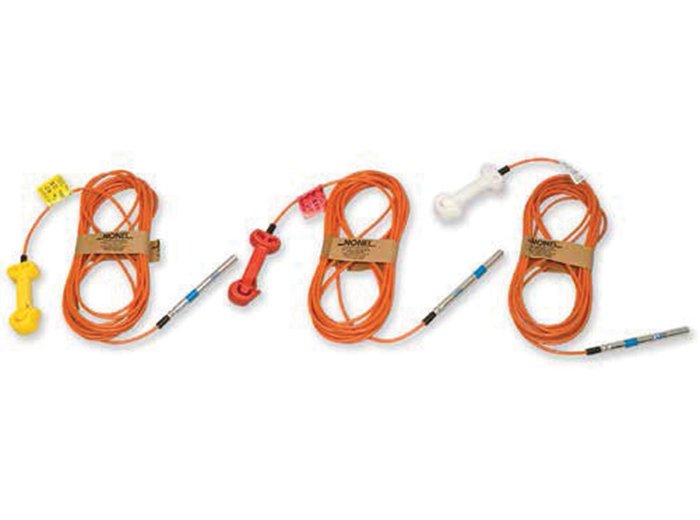
NONEL® nonelectric delay detonator EZ DET® units consist of a length of orange shock tube with a surface detonator attached to one end and an in-hole, High Strength, detonator on the other.
MORE ABOUT THIS PRODUCT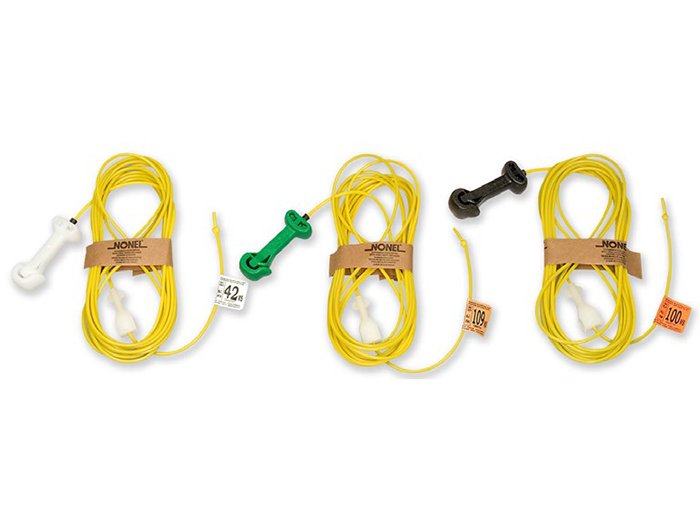
Nonelectric Trunkline Delay Detonators
NONEL nonelectric delay detonator EZTL units consist of a length of yellow shock tube, with a surface detonator attached to one end and the other end sealed.
MORE ABOUT THIS PRODUCT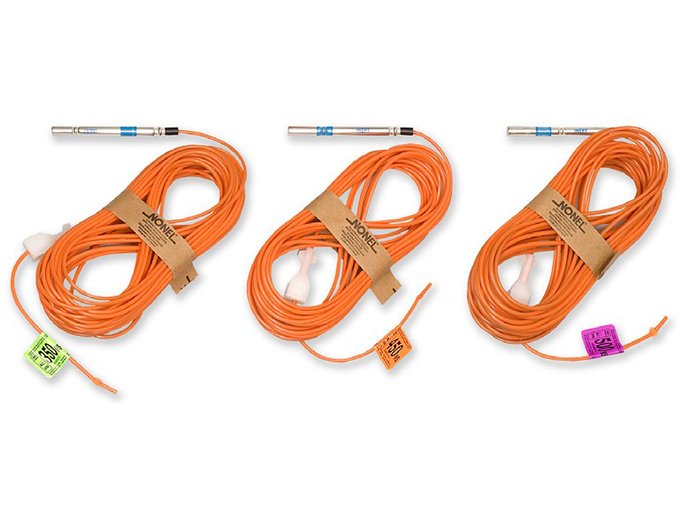
Nonelectric Millisecond Delay Detonator
NONEL® nonelectric delay detonator MS 1.1B units consist of a length of orange shock tube with a High Strength detonator attached to one end and the other end sealed.
MORE ABOUT THIS PRODUCT


